How to Choose a Topper Base Size
Choosing the right topper size is mostly about one thing: the base should fully cover the area you want to conceal and anchor onto stronger hair around it.
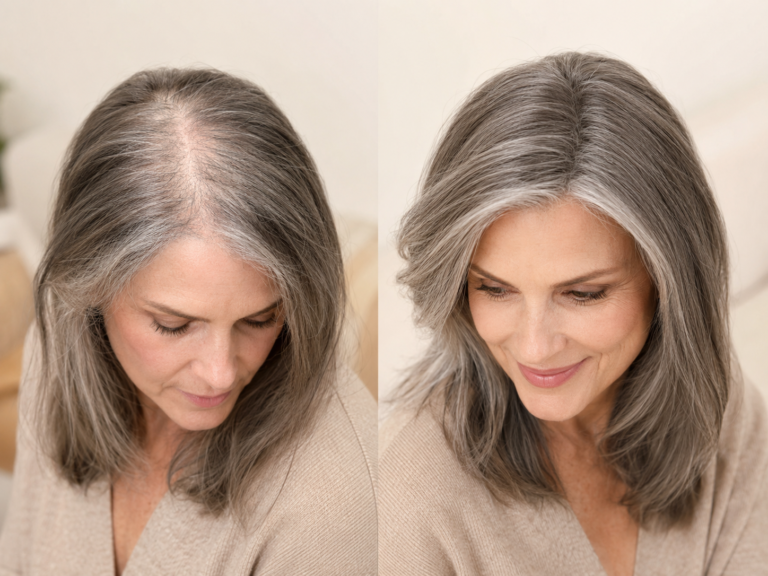
People wear toppers for many different reasons. You may be covering a widening part, postpartum or menopausal thinning, diffuse hair loss, or simply visible roots between color appointments. Your coverage needs may also change over time, so the “right” topper does not always mean the same size forever.
Then under the first section:
1. Start With What You Want to Cover
Think about the area you actually want the topper to address:
- Visible roots or gray regrowth: A smaller topper or top piece may be enough to disguise the part and add coverage between salon visits.
- Widening part or early thinning: Start with a smaller base that extends beyond the thinning area.
- Postpartum hair loss: Coverage needs can vary as the hair sheds and gradually grows back.
- Menopausal thinning: Diffuse thinning across the part and crown may benefit from a medium or larger base.
- More advanced thinning: A larger topper provides broader coverage and lets clips sit farther into stronger hair.

2. Measure the Thinning Area
Using a soft measuring tape, measure:
- Front to back
- Side to side
Then choose a topper base that extends slightly beyond the thinning area so the clips can attach to stronger hair.
For example, if your thinning area measures about 4″ × 4″, a 5″ × 5″ base may provide a more comfortable margin than a 4″ × 4″ topper.

3. Think About Coverage, Not Just Base Size
A larger base usually means:
- More coverage
- More hair
- Better distribution of weight and tension
- More flexibility as thinning progresses
But bigger is not automatically better. If your hair loss is limited to a small area, an oversized topper may feel unnecessarily heavy.

A Simple Starting Guide
Small base: Early thinning or widening part
Medium base: Noticeable crown or top thinning
Large base: Diffuse or advanced thinning across much of the top
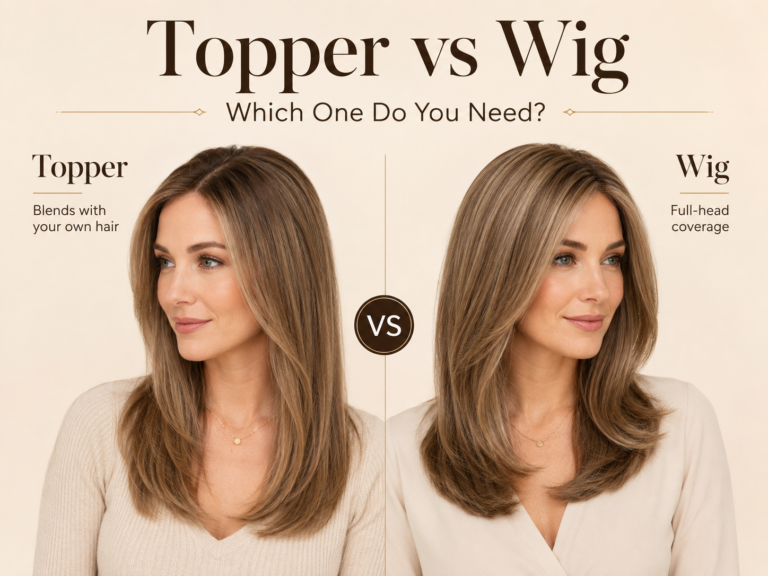
If your thinning extends beyond the area where clips can comfortably attach to healthy hair, it may be time to consider a larger topper or a wig instead.
The best topper should feel secure, cover the area naturally, and blend into the hair around it—not simply be the smallest size that hides the spot.