What Is a Hair Topper? A Beginner-Friendly Guide
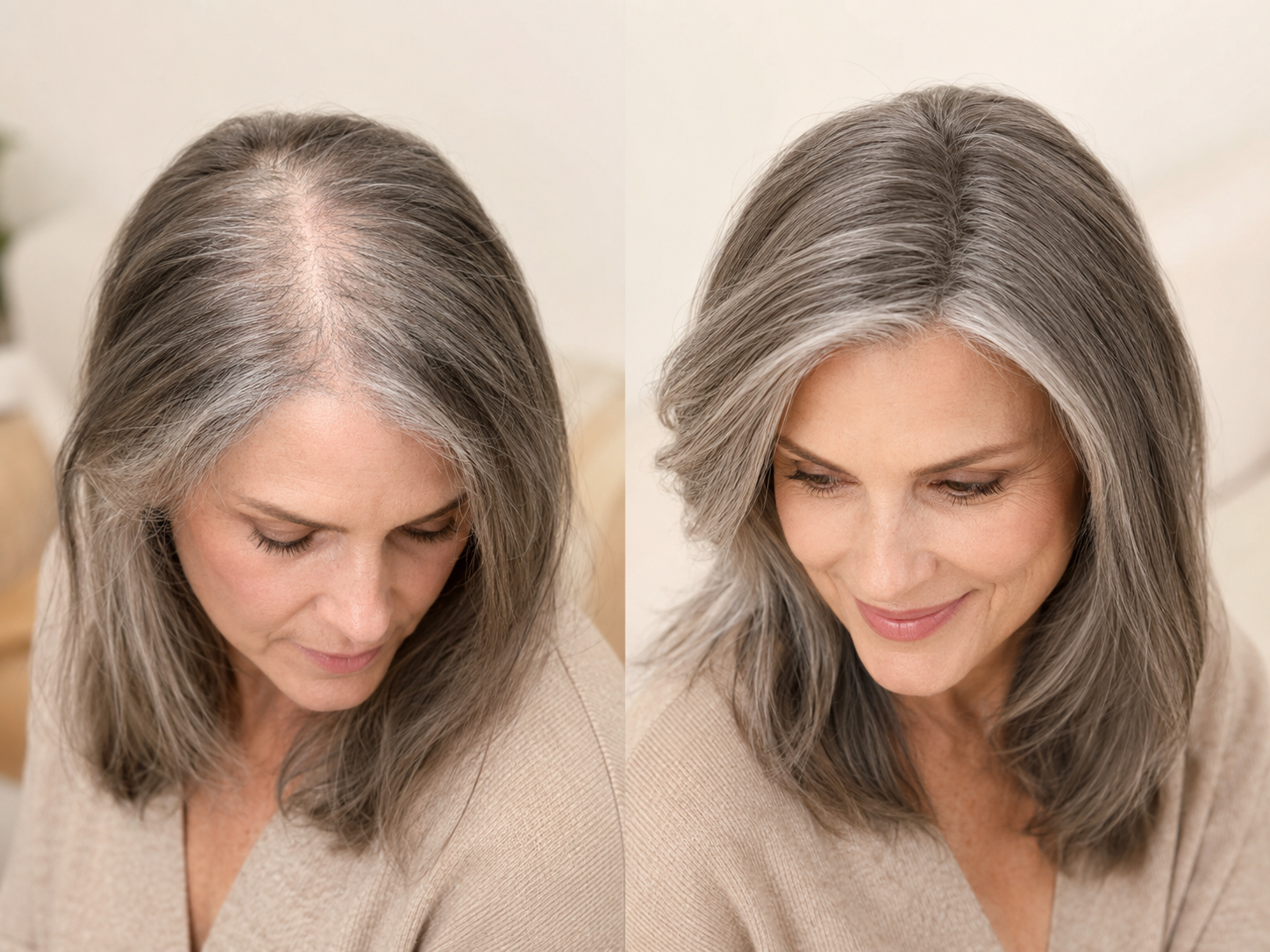
A hair topper is a small hairpiece designed to add coverage and volume to the top of your head.
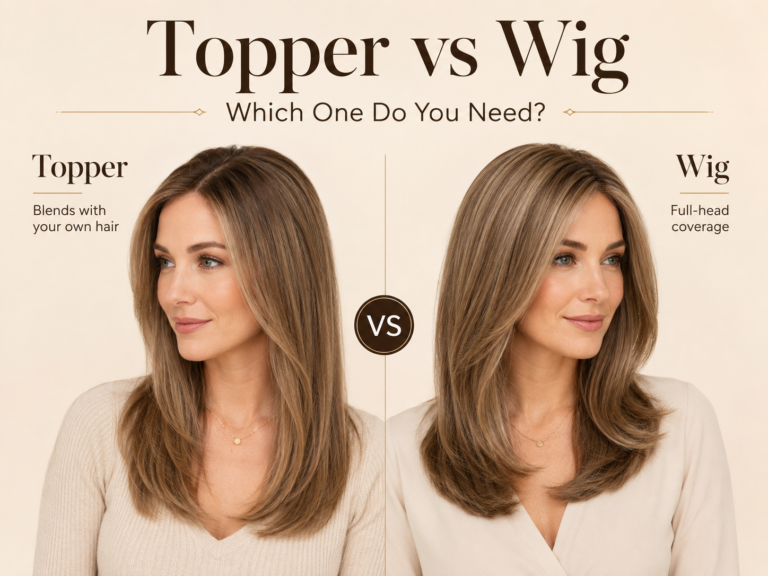
Think of it as the helpful older cousin of a wig. A wig covers your whole head. A topper covers the area that needs help, usually the crown, part line, or top of the head.
It clips into your existing hair and blends with your natural hair, so you can keep your own hair visible while adding extra fullness where you want it.
Who Is a Hair Topper For?
Hair toppers are often used by people dealing with:
- A widening part
- Thinning at the crown
- Flat or low-volume hair on top
- Postpartum shedding
- Perimenopause or hormonal thinning
- Early-stage hair loss
- Hair that looks fine everywhere else but “sad on top”
Basically, if your hair is still there but needs backup, a topper may be a good option.
Not every hair problem needs a full wig. Sometimes your hair just needs a little support team.
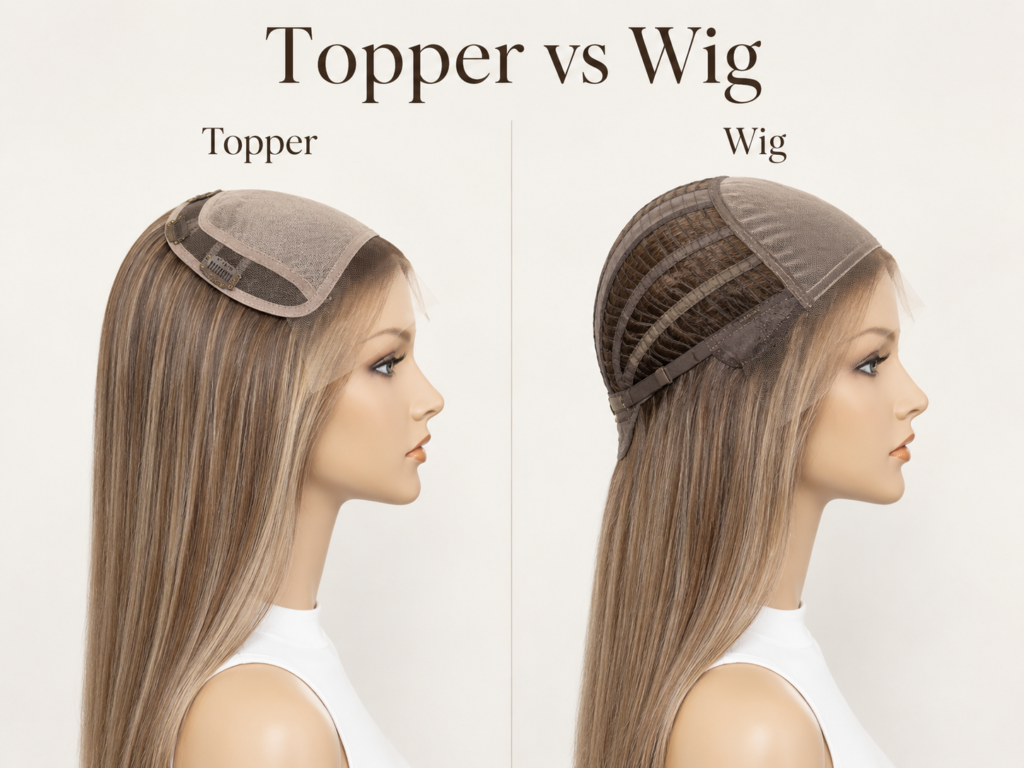
How Is a Hair Topper Different from a Wig?
A wig covers the entire head.
A topper only covers part of the head and blends into your own hair.
Here’s the simple version:
| Hair Topper | Wig |
|---|---|
| Covers the top/crown area | Covers the whole head |
| Blends with your natural hair | Replaces the full hairstyle |
| Good for partial thinning | Good for larger coverage needs |
| Usually lighter and cooler | More complete coverage |
| Requires some natural hair to blend | Works even with little/no bio hair |
How Does a Hair Topper Stay On?
Most toppers use small clips that attach to your natural hair. Some designs may also include other security features, such as a halo wire, adjustable band, silicone strip, or Velcro-style support.
For beginners, clips are usually the easiest to understand. Clip it in, blend it, check the mirror 17 times, then go live your life.
What Does “Base Size” Mean?
The base is the part of the topper where the hair is attached. Common sizes include 3×5, 5×5, 6×7, and 8×8.
A smaller base gives lighter coverage. A larger base gives more coverage.
For example:
- 3×5: light part-line coverage
- 5×5: common beginner-friendly size
- 6×7: more crown coverage
- 8×8: fuller top coverage
Will a Hair Topper Look Natural?
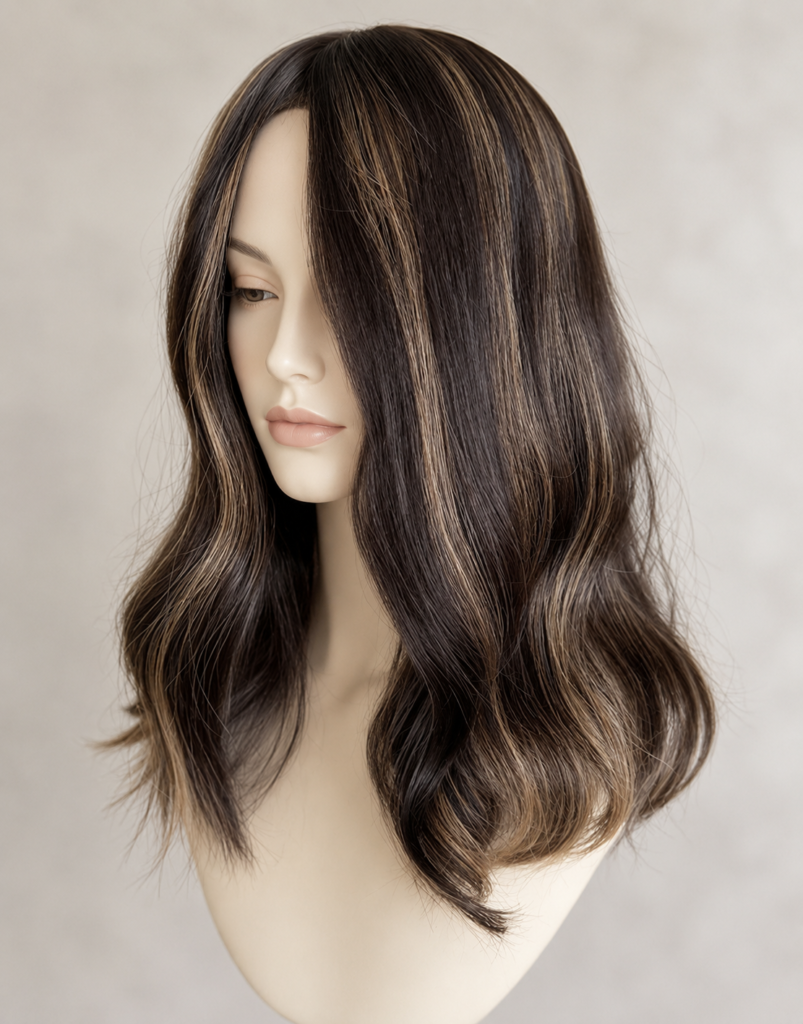
It can, if you choose the right size, color, density, and base type.
The biggest beginner mistake is choosing hair that is too thick or too different from your own color. More hair is not always more natural. Sometimes “I woke up with shampoo-commercial hair” is not the goal.
A natural-looking topper should blend with your real hair and your everyday style.
Is a Hair Topper Right for You?
A topper may be a good fit if:
- Your thinning is mostly on the top or crown
- You still have enough hair around the sides and back to blend
- You want coverage without wearing a full wig
- You want something lighter and less overwhelming than a wig
- You are new to hair pieces and want to start small
A wig may be better if your hair loss is more widespread, your hairline needs full coverage, or you want a completely new style.
A hair topper is not a “big dramatic hair thing.” It is simply a practical way to add coverage, volume, and confidence where your natural hair needs a little help.
It does not have to be scary. It does not have to look fake. And no, you do not need to become a professional hairstylist overnight.
You just need the right topper, the right color, and a little patience while you learn how to blend it.